In this video, I am at the Catacombs in Palermo, Sicily. It will help you in uncovering Palermo’s Capuchin Catacombs: History, Rules & Tips.
It is one of the most famous and also the most bizarre tourist attractions in Palermo, the Sicilian capital.
The Capuchin Priests started the Catacombs behind the church called Santa Maria della Pace. In English, this would translate to Saint Mary of the Peace.
How the Catacombs Started in Sicily
In 1534, they began burying their dead in the cemetery near the church, but soon ran out of space. In 1599, they found a cave located behind the main altar of the church.
They began to utilize this cave for their dead. And they soon realized that the bodies in this cave remained well-preserved. They came to the conclusion that this cave must be an act of God because of its special qualities. Thus, they began to bury the remains of the Capuchin Friars in this cave.
They then decided to accept bodies from the public and charge a fee. The bodies that were located higher on display would command a higher fee. And conversely, the ones lower on the display would be a lower fee.
Sections of the Catacombs in Palermo
They then divided the cave into sections based on whether you were a doctor, a priest, a child, a man, a woman, etc. There is even a section for the Capuchin priests. They are all dressed in their finest garments and arranged for display.
It is a way to display their social status and a symbol of prestige if they had wealth during their lifetime.
You are looking at the remains of people who were doctors, lawyers, and priests from hundreds of years ago. They are from a different time frame, but they undoubtedly had the same problems and concerns we have today.
Today, the Catacombs of Palermo house more than 1,000 mummies and 8,000 corpses.
Rosalia Lombardo Palermo’s Sleeping Beauty
 The most famous of the corpses is that of Rosalia Lombardo, a child from a noble family who passed away before her second birthday.
Alfredo Salafia, a self-taught taxidermist, developed the formula for the child’s embalming. The technique replaces the child’s blood with embalming fluid. And her organs are still intact. The child’s hair still appears very soft and supple.
Her remains are on display in a glass case, so lifelike that it appears you are looking at a sleeping doll. She thus earned the nickname “Palermo’s Sleeping Beauty.” Ironically, she is named after Palermo’s patron saint, Rosalia.
One of the last burials in the Catacombs of Palermo is Rosalia Lombardo. The burials span the period from 1599 to the early 1930s.
Thus, the people of Palermo take great pride in this child, who also happens to bear the name of the patron saint, Santa Rosalia.
Alfredo Salafia’s Secret Embalming Technique
Unfortunately, Mr. Salafia passed away before he could share his incredible embalming technique. A relative later discovered some handwritten notes, which turned out to be the formula. And later, scientists verified its accuracy.
The corpses in the Sicilian Catacombs
It is interesting and amazing to view the corpses. Many of them still have totally intact hair. The hair tends to be Brillo-like and appears very wiry and brittle—a stark contrast to the hair of Rosalia Lombardo.
Some have their jaws wide open, and some are closed. I don’t know if that has any significance. They all have tags attached to their clothing that appear to be price tags, but I’m sure it’s some type of numbering system.
You cannot think that someday all our remains will end up the same way. It is pretty sobering, actually.
Sicily’s Respect for the Deceased
The Catacombs are quite a tourist attraction, and you can arrange a group tour to visit. Some buses and taxis stop often in that square.
It is part of Sicilian culture to honor the dead by maintaining a relationship with them. This is evident during the Festa dei Morti, which happens every year on November 2nd.
This holiday is the day families visit their deceased loved ones in the cemetery, bringing flowers and even a lunch to make a day of it.
A traditional food item for that day is the muffoletta. Learn more about the Palermo muffoletta tradition for Festa dei Morti.
Visiting the Catacombs in Palermo, Italy
The entrance is 5 euros and takes about 20 to 30 minutes to walk through. You can arrange for guided tours, which will cost more.
One thing to note, to respect the privacy of the deceased, no photography is allowed. There are guards present in the caves to ensure compliance and enforce the rule. It is a solemn place, and visitors are encouraged to walk quietly.
You will walk through hallways where dead bodies are on display, many of them hanging on the wall. It is not as claustrophobic as the Catacombs located in Paris. There are also crypts.
And remember, this may not be a good tourist attraction in Palermo if you are traveling with children.
However, the Catacombs are worth a visit, as they are a stark reminder of how short our time here on earth is. It forces you to face your own mortality. But, ironically, it also makes you appreciate life a little more. Life is precious and beautiful and to be savored as much as possible.
Getting to the Catacombs in Palermo
To get to the Catacombs in Palermo, it is a half-hour walk from the historical center, or Quattro Canti. You will head towards the main cathedral and keep walking past the Porta Nuova.
There are also buses and taxis available that can take you there from Piazza Indipendenza, bus route 327. Once you arrive at Via Pindemonte, you will take a right. There is a CONAD grocery store on this corner.
By train, you will want to go from the Central Station to the Palazzo-Orleans stop. And then follow the signs to Piazza Indipendenza towards Corso Calatafimi, and then at Via Pindemonte take a right. It is about a 15-minute walk from Piazza Indipendenza.
Hours of Operation for the Catacombs
The Catacombs are open every day from 9 AM to 12:30 PM. They take a lunch break and reopen from 3 PM to 5:30 PM. They will be closed during Italian holidays.
Close to the Catacombs are the Royal Palace, also known as the Norman Palace. Sicily was once ruled by royalty, and this is the palace where they resided. The Palatine Chapel is where they would worship.
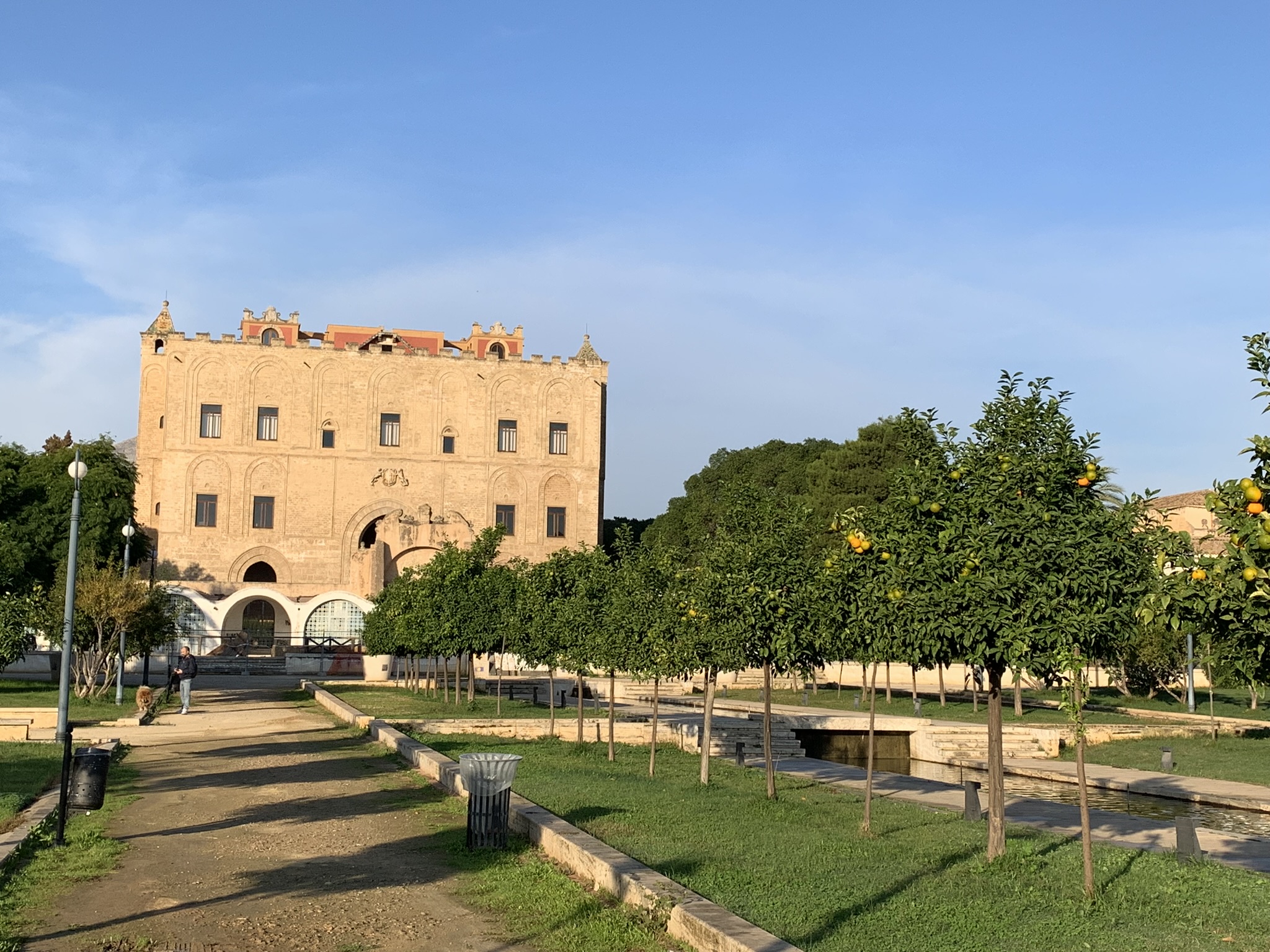
You can also walk a bit further from the Catacombs to see the Zisa Palace, an Arab-Norman-style castle located in a lovely park.
Vocabulary related to this video of the Catacombs in Palermo
Catacomb – Catacomba
Catacombs – Catacombe
Underground – Sotterraneo / Sottoterra
Tunnel – Galleria / Tunnel
Chamber – Camera / Sala
Passageway – Passaggio / Corridoio
Labyrinth – Labirinto
Crypt – Cripta
Burial site – Sito di sepoltura
Cavern – Caverna
Grave – Tomba
Tomb – Sepolcro / Tomba
Sarcophagus – Sarcofago
Sepulcher – Sepolcro
Remains – Resti
Bones – Ossa
Skeleton – Scheletro
Ossuary – Ossario
Tourist – turista
Tourists – turisti
Bus – autobus
Taxi – taxi
Line (queue) – fila
Entrance – ingresso
Also pictured in this Catacombs video
Video clip from the historical center Quattro Canti in Palermo.
Ballarò street market (video clip)
Teatro Massimo (pictured)
Palermo street scene with a horse carriage (video clip)
There is also a scene of Palermo nightlife (video clip)
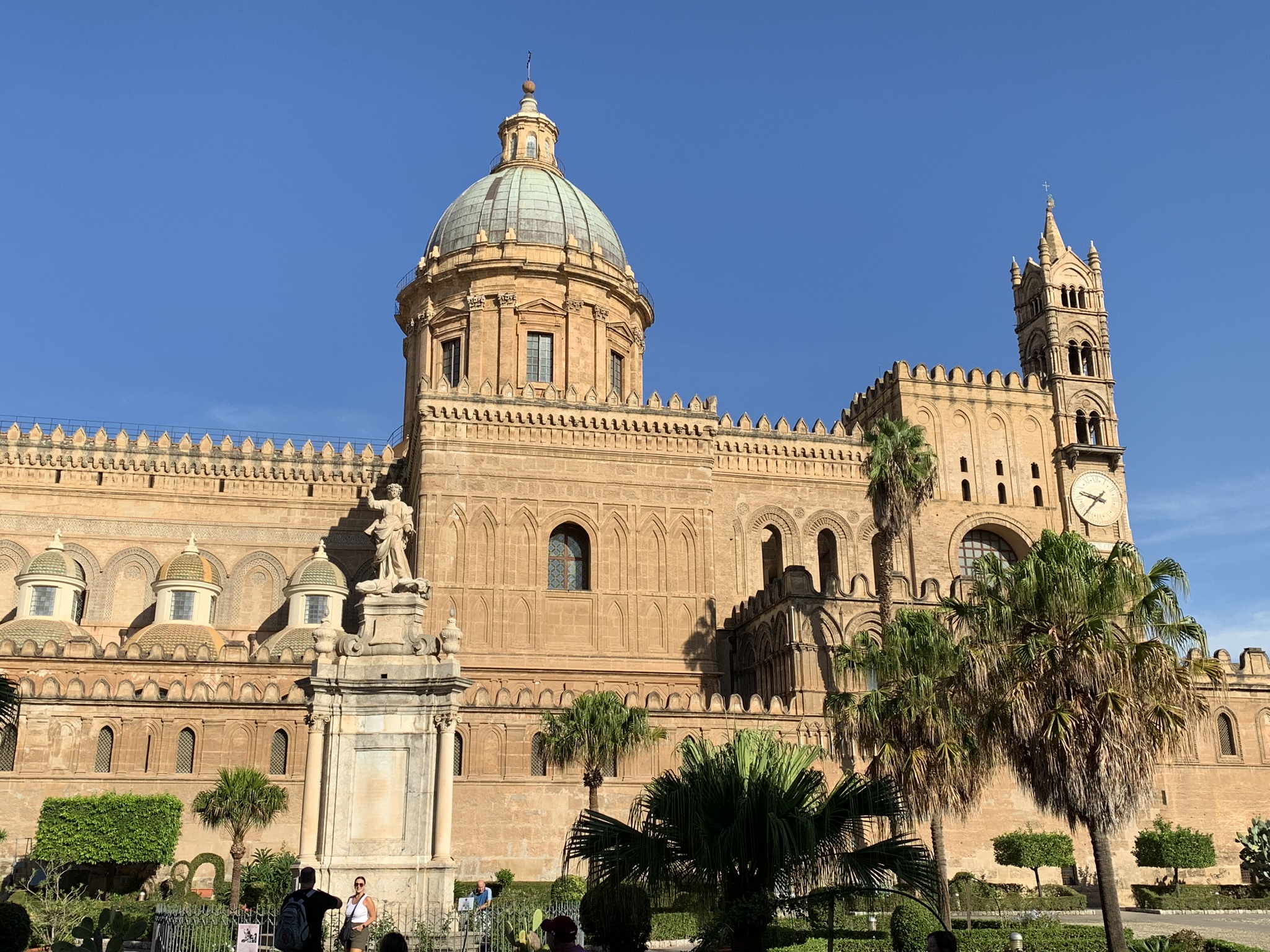
Palermo Cathedral (pictured)
The origins of the word cappuccino
Interesting fact: The word cappuccino comes from the Capuchin friars because the colors of their robes match the color of the world-famous coffee drink.
You may be interested in:
Guidebook for Palermo Italy travel

Portrayal of the Capuchin Catacombs in Palermo, Italy – this video post will help you in uncovering Palermo’s Capuchin Catacombs: History, Rules & Tips